Data Sovereignty in Europe: Why It Matters More Than Ever
Big Data · August 26, 2026
Sinabis's take on the 2026 sovereignty debate reshaping how European law firms, compliance teams, and government agencies handle their most sensitive data.
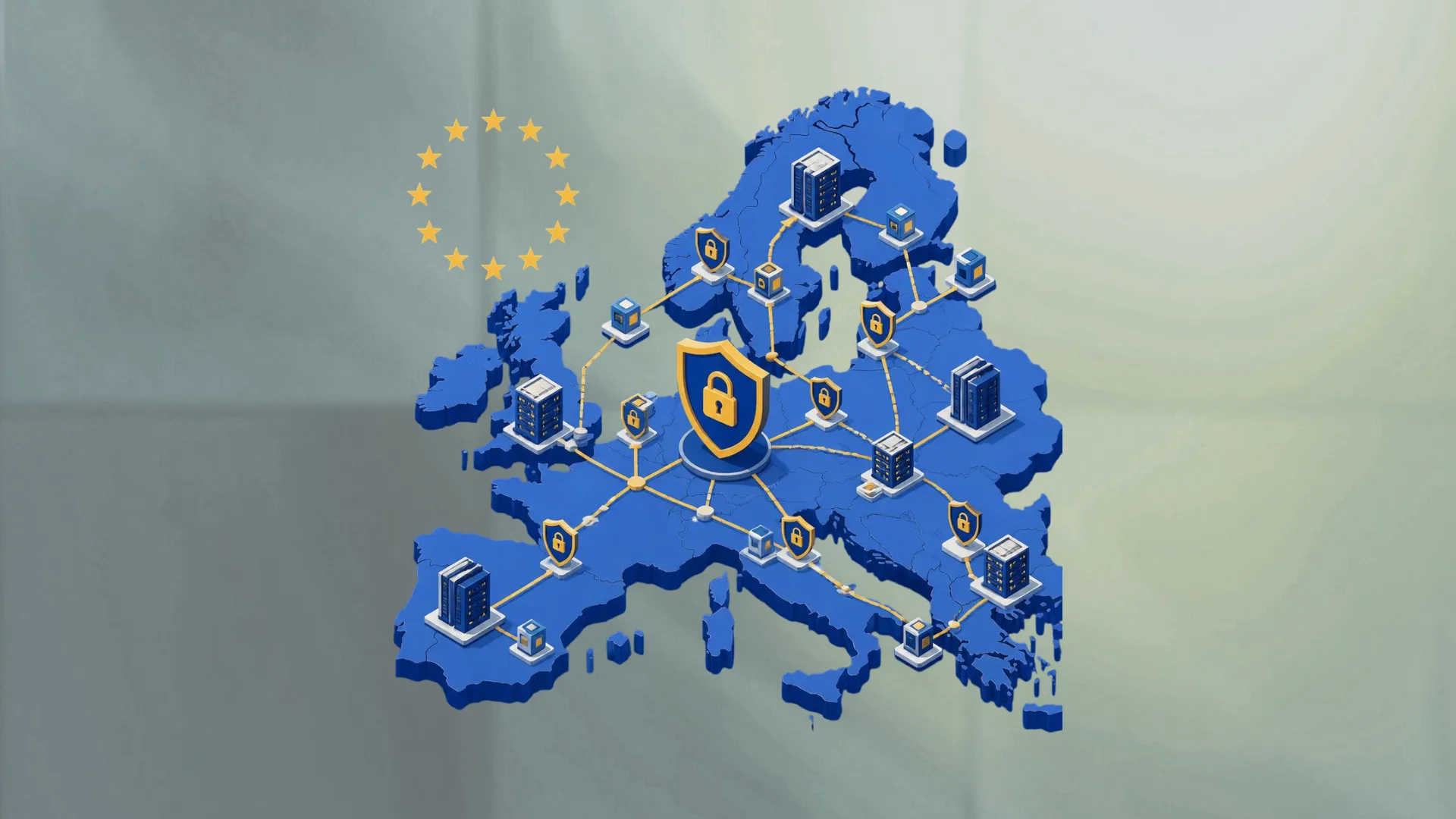
Data sovereignty means an organisation's data stays subject to the laws of the country where it operates, not the laws of wherever its cloud provider happens to be headquartered. In 2026, that distinction has moved from a legal footnote to a board-level concern across Europe, as new regulation, geopolitical pressure, and a wave of “sovereign cloud” investment all collide at once.
The pressure is coming from multiple directions simultaneously: German companies say they want independence but haven't achieved it, European regulators are actively legislating the term into procurement law, and even the largest American cloud providers are restructuring to look more European. This piece walks through why the urgency is real, how the market and regulators are responding in 2026, what it means industry by industry, and where Sinabox fits for organisations that don't want to wait for the debate to settle.
I. Why Data Sovereignty Is Suddenly Urgent
For years, “the cloud is GDPR-compliant” was treated as good enough. That assumption is now under real pressure. According to Bitkom's Cloud Report 2025, 82% of German companies say they want greater independence from foreign providers, yet 78% remain dependent on them anyway and trust in U.S. providers sits at just 38%. That gap between wanting independence and actually achieving it is exactly why the topic has stopped being theoretical.
II. Data Sovereignty vs. Data Residency
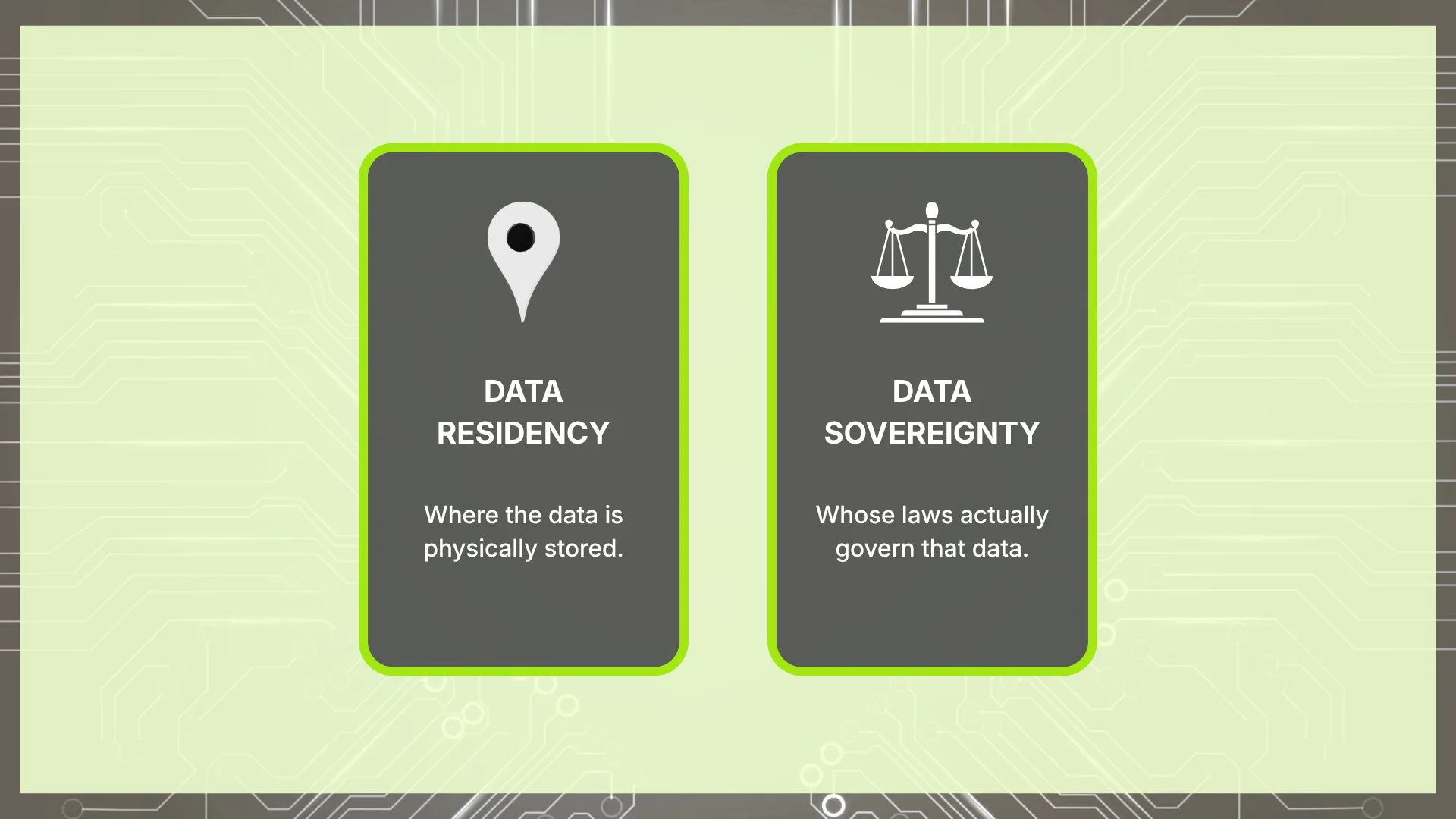
The two terms get used interchangeably, but they describe different things. Data residency is about geography: where data physically sits. Data sovereignty is about jurisdiction: whose laws actually govern that data, regardless of where it sits. The distinction is not academic: the U.S. CLOUD Act of 2018 allows American law enforcement to compel U.S.-headquartered companies to hand over data on request, regardless of where that data is physically stored. A server sitting in Frankfurt satisfies data residency, but it does not automatically satisfy data sovereignty if the company operating it is American. Confusing data sovereignty vs. data residency is one of the most common and costly assumptions organisations make when choosing a cloud provider.
III. Europe Is Voting With Its Wallet
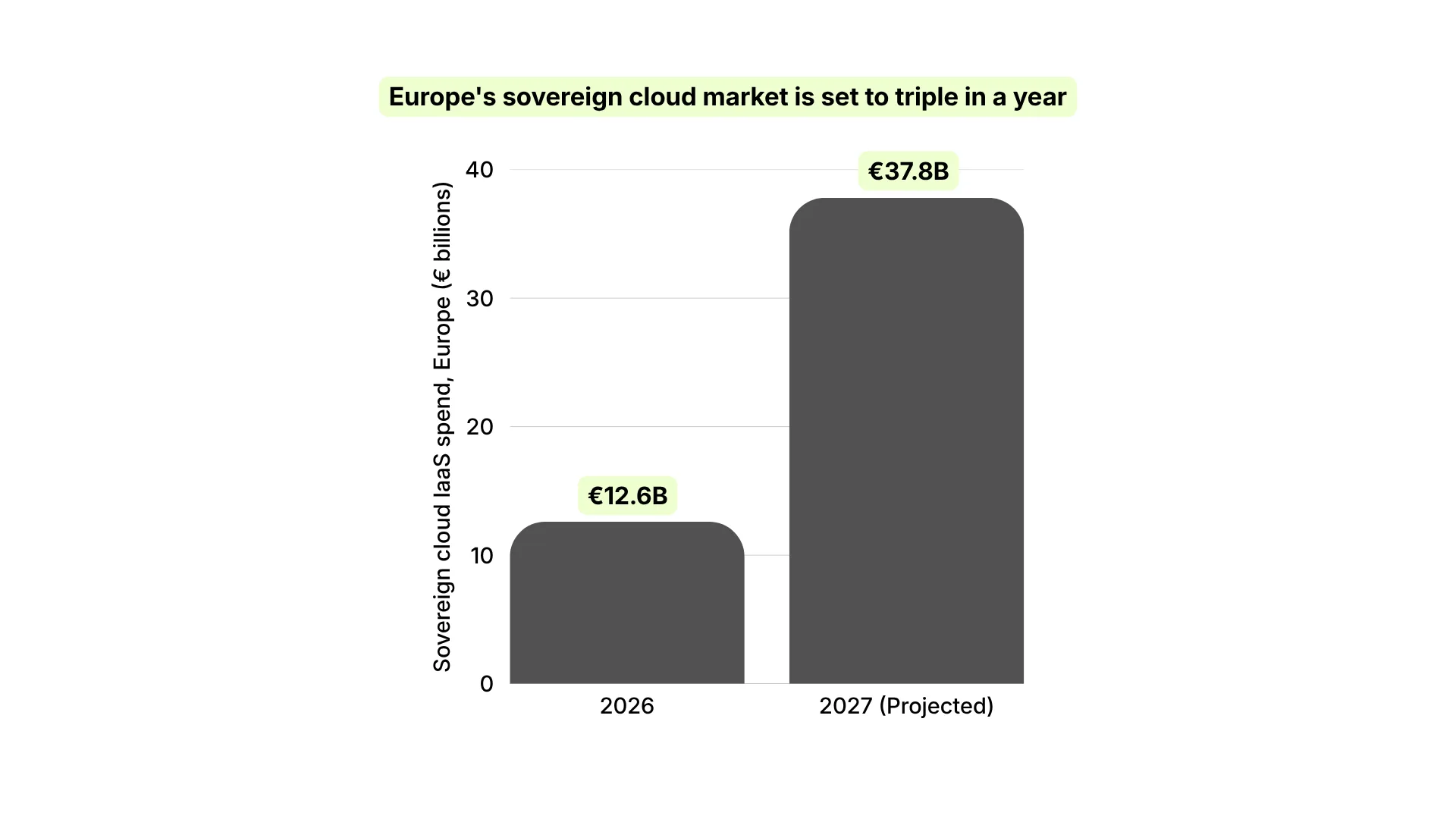
The market has responded accordingly. Gartner projects worldwide sovereign cloud IaaS spending will hit $80 billion in 2026, with Europe alone accounting for €12.6 billion a figure expected to triple by 2027, overtaking North America entirely. The investment is concrete, not aspirational: Schwarz Group (the parent of Lidl and Kaufland) is pouring €11 billion into STACKIT, a data centre in Lübbenau capable of hosting up to 100,000 GPUs. Even AWS has responded to the pressure, launching a dedicated European Sovereign Cloud through a new German GmbH in Brandenburg in January 2026, backed by a €7.8 billion investment.
Together, these are some of the clearest data sovereignty examples to watch in 2026 real capital moving toward EU-controlled infrastructure at a scale that would have been hard to imagine two years ago.
If a subsidiary of a U.S. hyperscaler still answers, ultimately, to a U.S. parent company does wrapping it in a European legal entity actually resolve the CLOUD Act exposure, or just move the jurisdictional question one layer down?
It is a live and unresolved debate among European regulators and legal scholars, and it is precisely why some organisations are choosing not to rely on any cloud structure, sovereign-branded or otherwise, for their most sensitive data.
IV. The 2026 Policy Landscape
Regulators are moving on multiple fronts at once. On June 3, 2026, the European Commission unveiled its European Technological Sovereignty Package: a four-part plan covering semiconductor capacity (Chips Act 2.0), unified cloud and AI evaluation rules, an open-source strategy for public administration, and sovereign AI models for the energy sector. Weeks earlier, the Commission signalled plans to restrict U.S. cloud platforms from processing the most sensitive categories of government data: health records, financial information, and legal data aimed squarely at reducing CLOUD Act exposure. A formal public consultation on safeguarding EU data sovereignty opened on July 8, 2026 and runs through September 8.
Not every regulatory move points toward tighter control, though. The Commission's parallel “Digital Omnibus” proposal which would simplify GDPR reporting requirements and push AI Act compliance deadlines back to December 2027 has drawn sharp criticism from privacy advocates like Max Schrems, who calls it “the biggest attack on Europeans' digital rights in years,” while industry groups argue it doesn't go far enough. As of July 2026, Council negotiations on the file had stalled, leaving the balance between simplification and protection genuinely unresolved. Meanwhile, the EU Data Act will eliminate cloud-switching fees starting January 2027, letting customers exit a provider with just two months' notice directly lowering the cost of moving toward more sovereign alternatives.
The EU has also put an actual data sovereignty framework behind these ambitions: a Cloud Sovereignty Framework built around eight sovereignty goals, giving public bodies a structured, repeatable way to score cloud providers rather than relying on marketing claims. Germany has moved fastest in applying it. The Vergabebeschleunigungsgesetz (Public Procurement Acceleration Act), passed in July 2026, writes digital sovereignty directly into public procurement law, allowing it to be used as an award criterion and as an ongoing contract condition. Germany and France agreed a joint definition of digital sovereignty in June 2026, and public bodies are already acting on it: the federal government has issued thousands of licenses for the open-source openDesk office suite, and SAP and Deutsche Telekom recently won the contract to build Germany's Sovereign AI Platform for public administration.
V. What This Means, Industry by Industry
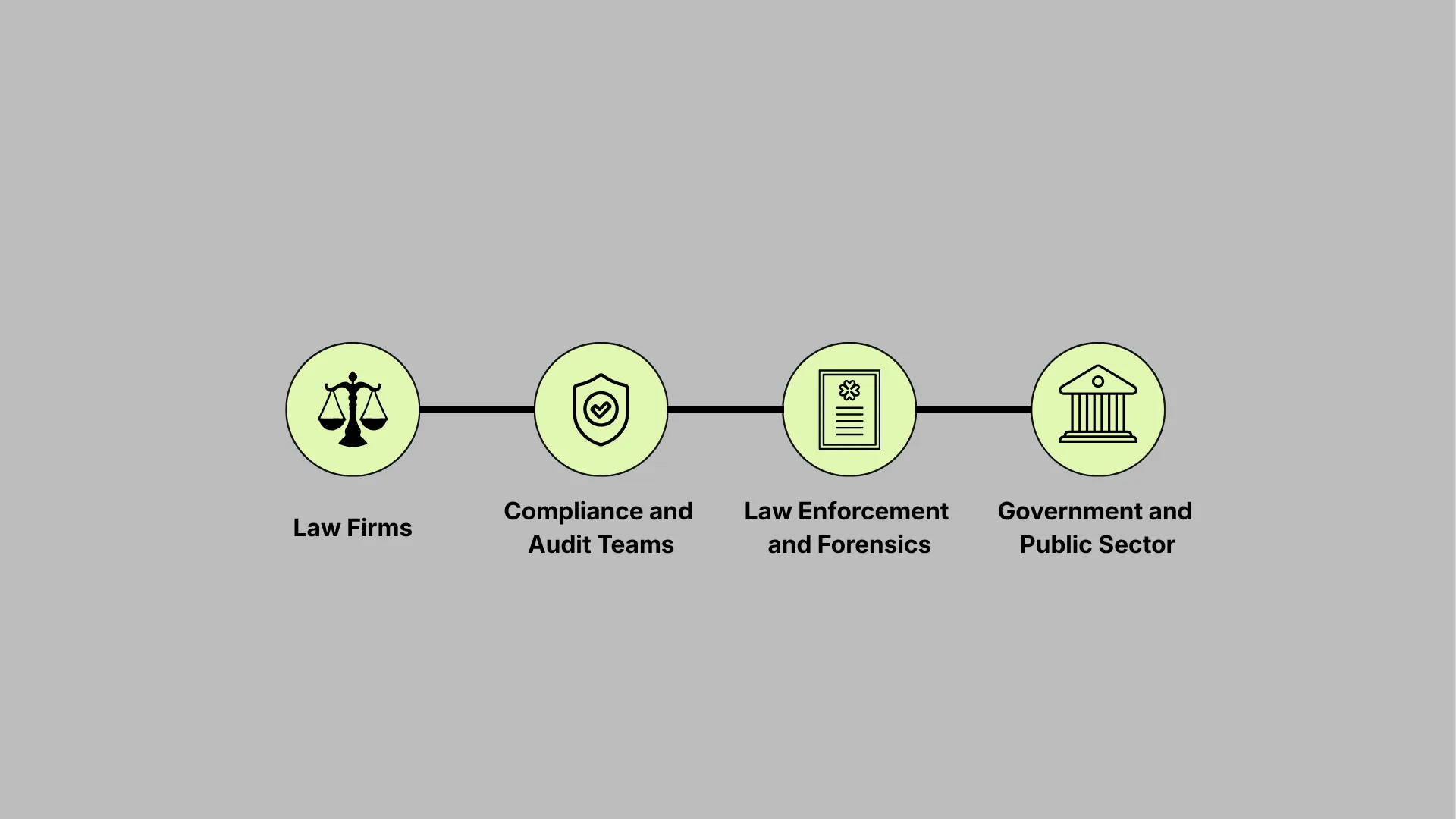
The stakes differ depending on who is holding the data, but the underlying exposure is the same across sectors:
▸ Law firms handle privileged case data, where a single cross-border transfer can trigger both a GDPR violation and a breach of client confidentiality.
▸ Compliance and audit teams increasingly find data sovereignty and compliance treated as the same conversation by regulators, who ask not just whether a tool is GDPR compliant, but where, physically and legally, the data actually sits.
▸ Law enforcement and forensic investigators need evidence handling that survives a court's scrutiny of chain of custody a standard that gets harder to meet the moment data touches an external cloud environment.
▸ Government and public-sector bodies are now legally required, under laws like the Vergabebeschleunigungsgesetz (Public Procurement Acceleration Act), to weigh sovereignty in every procurement decision.
Data sovereignty is no longer a “nice to have” compliance checkbox, it is an operational requirement with legal teeth in 2026.
How Sinabis Approaches This
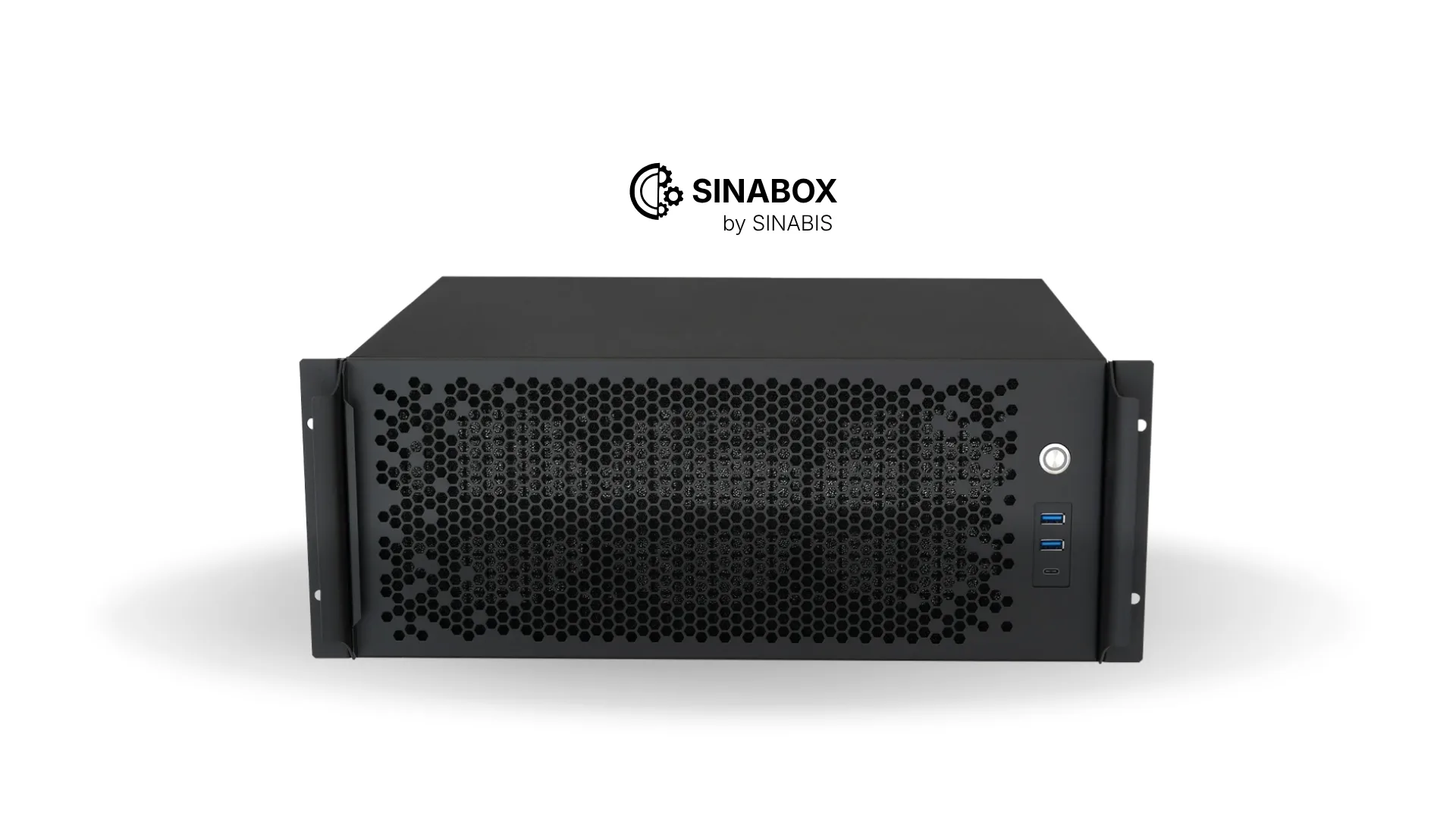
Every solution described above: sovereign cloud subsidiaries, EU-hosted infrastructure, new legislation, still relies on data leaving an organisation's own walls at some point. Sinabis takes a different position. The Sinabox is a complete AI infrastructure appliance that runs entirely on-premise, inside the client's own building, with no data ever transmitted externally.
For a law enforcement agency processing forensic evidence, a law firm analysing privileged documents, or a compliance team reviewing sensitive files, that changes the question entirely. There is no need to trust a provider's legal structure, evaluate a subsidiary's independence from its parent company, or wait for the next regulatory ruling on cross-border data flows because the data never leaves the building in the first place.
If you're building a data sovereignty framework of your own, the most reliable starting point is architectural, not legal remove the dependency altogether.
Curious how a sovereignty-first approach would work for your organisation? Get in touch here.
→ Learn more: www.sinabox.de
Sinabis Analytics GmbH · X64 Forensic GmbH · X64 Systems GmbH
Jui Mehta