From Mailbox Archive to Board Report: An eDiscovery Story with Sinabis Inspector
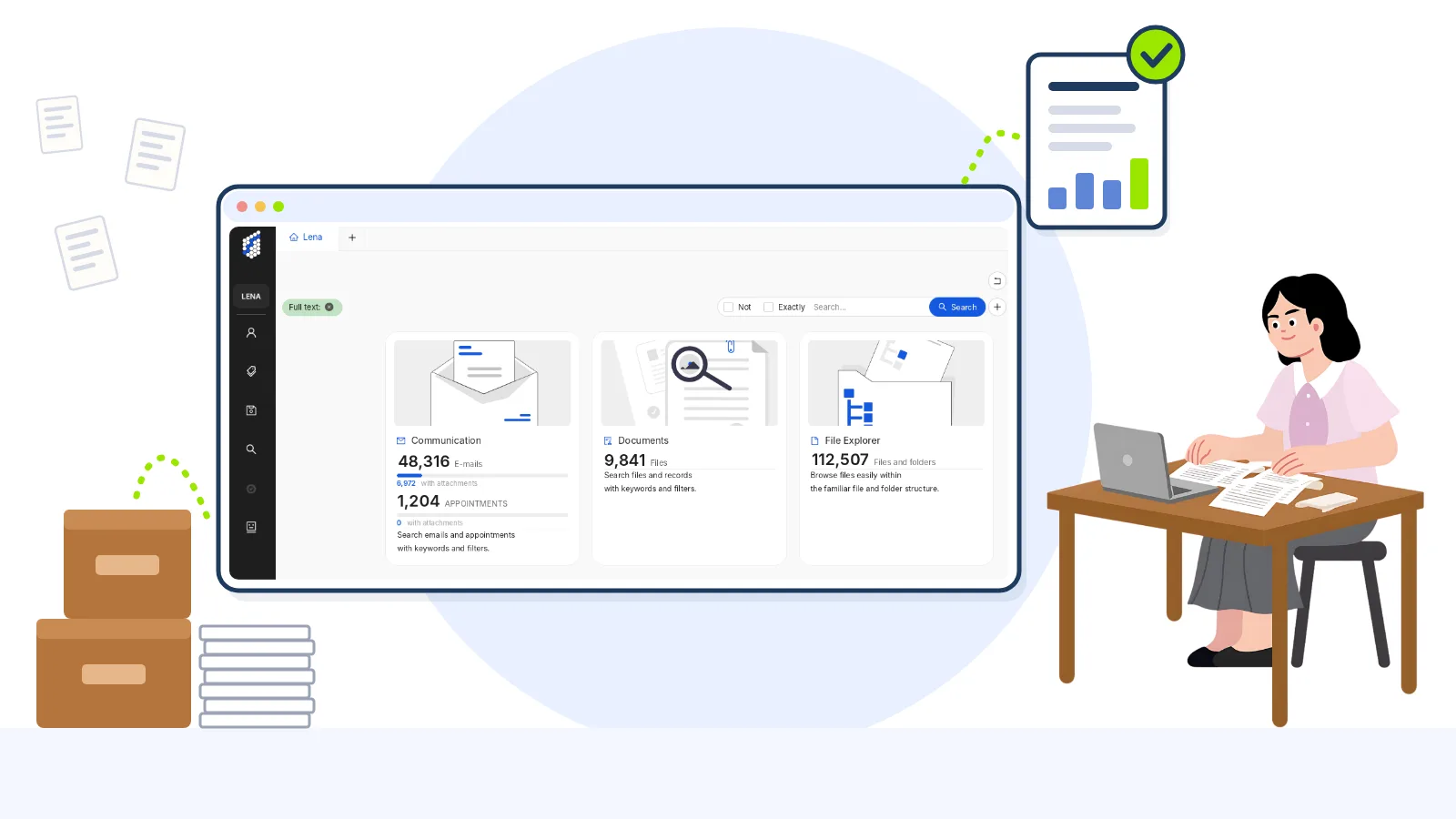
A fictional story about an internal investigation and a mountain of data, and how Sinabis Inspector, eDiscovery software from Sinabis Analytics GmbH, searches emails, archives and audio in one place, with the data processed in Germany or on an offline review laptop.

Lena is fictional. The situation she finds herself in is not. In many organisations, an internal investigation begins the same way: a tip arrives, the data turns up in every format imaginable, and someone has to find the handful of messages that matter among thousands that do not.
That work has a name. eDiscovery, short for electronic discovery, is the systematic search and review of electronic data for legal proceedings or internal investigations. It is usually described in stages from identification to production, as in the EDRM reference model. This story shows what it looks like from the chair of the person doing it.
Friday, 9:00: Too Much Data, Too Little Time
Lena Brandt works in the compliance team of a mid-sized manufacturing company in the Rhine-Main region. On Thursday evening, a tip came in about irregular payments to a supplier. By Friday morning, IT had delivered everything that might be relevant: a mailbox archive, exported chat histories, a folder of voice messages and an image of a laptop hard drive, taken through a writeblocker so the original stayed untouched.
She looked at the pile. Thousands of files, formats she rarely worked with, and a board meeting on Monday that expected a first assessment. She had done this the slow way before: open a file, read it, close it, repeat, until the days ran out. This time she also had a second worry. The data protection officer would ask where all of this was going to be processed, and “somewhere in a cloud” was not going to be an acceptable answer.
Friday, 9:40: Drag, Drop, Done

A colleague in IT pointed her to Sinabis Inspector. Lena opened the Sinabis Dashboard, dragged the disk image and the archives into the upload area, and waited for the tool to ask her to configure something. Nothing did. Inspector processed and indexed the files on its own, with no manual steps. She made a coffee, and when she came back, the data was ready to search.
Friday, 11:00: eDiscovery Search Finds the Needle in the Archive
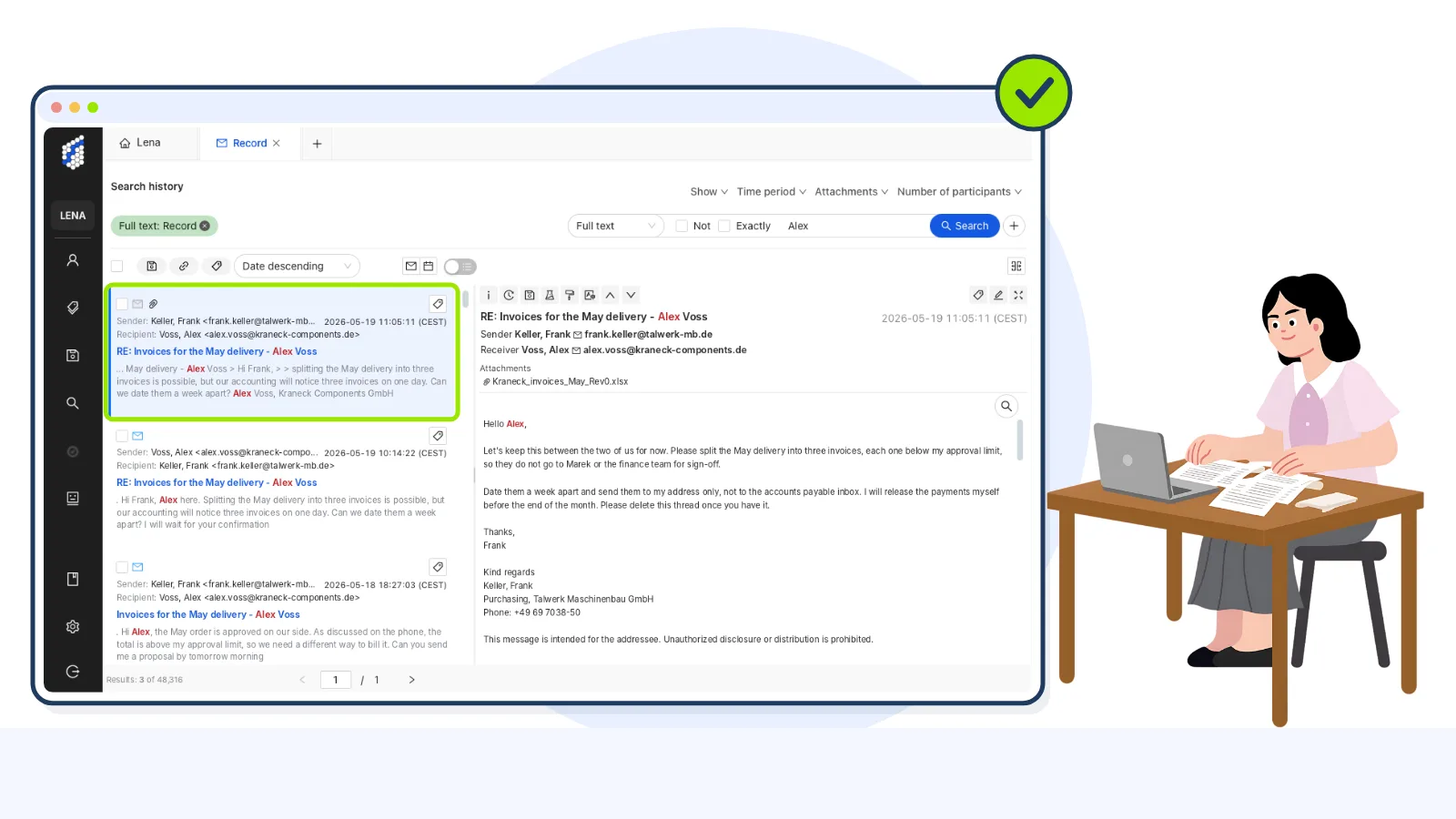
She typed the supplier’s name into the search bar. Results appeared as she typed. The third hit was an email with a short attachment, and the whole thing had been buried inside a zipped archive, inside another message. Done by hand, she would not have found it before Monday, if at all. Here it sat in a list, with its source shown next to it. She tagged it and kept going.
Friday, 14:00: Audio Search for the Message No One Typed

After lunch she tried something she did not expect to work: she searched the voice messages. The same name came up in a short audio recording. It had been spoken, never written, and no search across the documents would have caught it. She listened to the clip twice, tagged it and noted the time.
Friday, 16:00: One Document Leads to Five
One of her tagged documents looked like a template for the payments. She used the similarity function, and Inspector showed her related documents she had not searched for. Together they formed a pattern: the same wording, the same approval chain, spread across many months. She tagged those too. By now her list was no longer a pile. It was a story with a beginning, a middle and a few gaps she could name.
Friday, 17:30: Where Is the Evidence Processed? The GDPR Question
Markus from the data protection office stopped by her desk. Employee emails and chats contain personal data, so the GDPR applied, and his question was the fair one she had been expecting: where was all of this being processed?
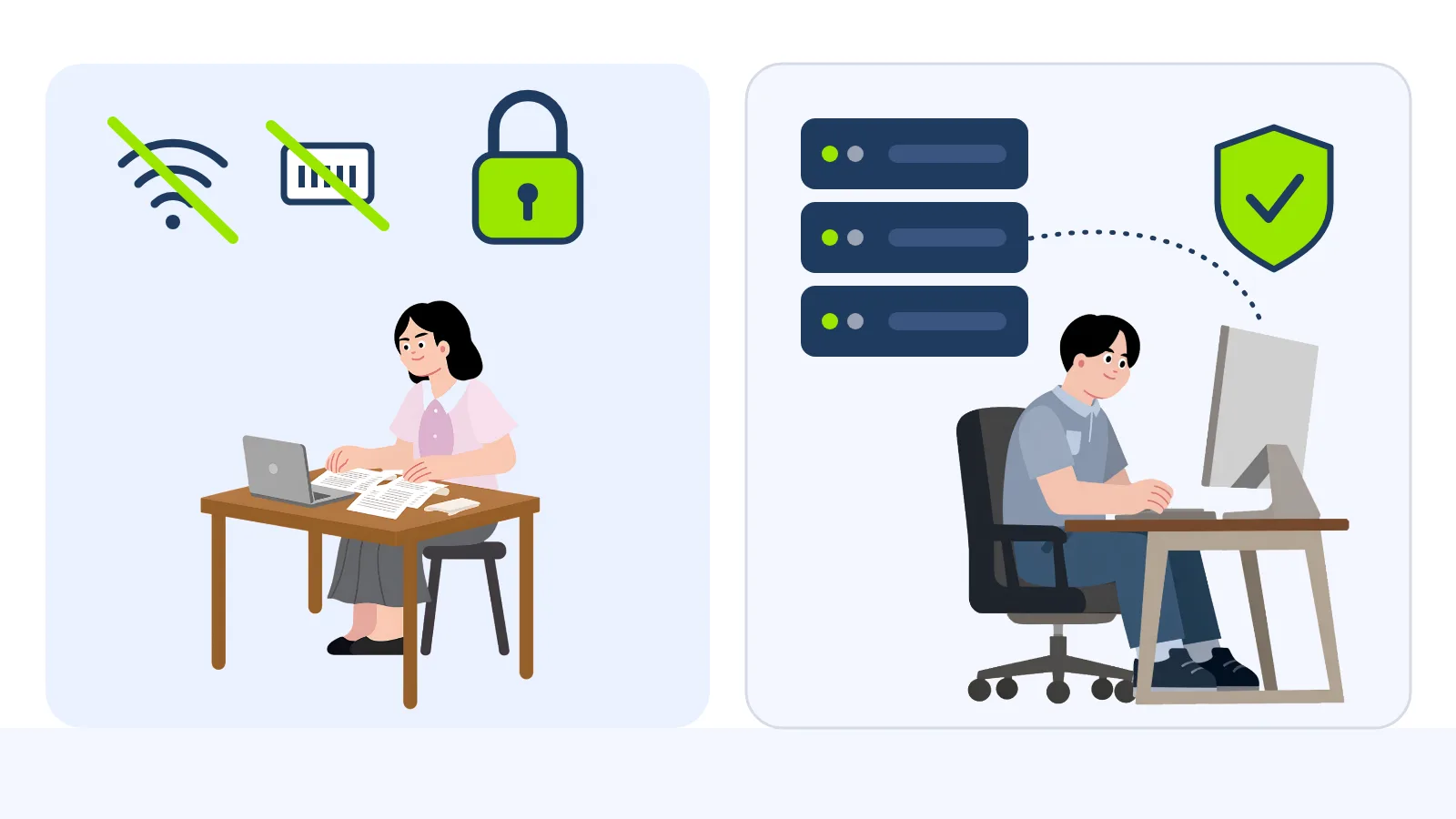
Lena had the answer ready. In Germany. The data was handled in secure European data centres through the Sinacluster, processed only in Germany and the EU, and she reached it over an encrypted VPN. She had also checked the other option, for cases that call for even more distance: a review laptop with Inspector preinstalled and the prepared data on board. It has no WiFi hardware and no ethernet port, so there is nothing for it to connect to, even by accident.
This case ran on the cluster, because a colleague from another site would need to join her on Monday. But it was good to know the offline route existed. Markus nodded and wrote one line in his notes. The question she had been dreading took two minutes.
Monday, 9:00: Team Review with Reviewer Roles

Tobias from internal audit joined from another site. Lena gave him a reviewer role with access to this case only, so he saw what he needed and nothing else. They split the tagged documents between them and worked at the same time, each adding tags without waiting for the other. Where files used to travel back and forth by email, there was now one place, and both of them were in it.
Monday, 14:00: The Meeting
By late morning, Lena had exported the tagged results. By the afternoon she was in the boardroom with a clear first picture: which payments, which people, which messages, and which questions were still open. It was not the final word on the case. It was a solid first assessment, built on evidence she could point to, and she left the room on time.
What Lena’s Week Shows About eDiscovery Software
Lena did not become a technical expert over a weekend. What changed was the shape of the work. Instead of opening files one at a time, she searched everything at once. Instead of wondering whether something was buried in an archive, she could see it. And the question about where the data lived turned from a roadblock into a short conversation.
Sinabis Inspector is the eDiscovery software behind Lena’s story. It lets teams search and review emails, archives, forensic images and audio in one place, with tagging, similarity detection, reviewer roles and export, whether the case runs on an offline review laptop or on the Sinacluster. Investigative authorities, law firms, auditors and in-house teams use it for investigations and proceedings. If your team recognises Lena’s Friday, you can try the Inspector demo or watch the video.
If the payments themselves need tracing, Sinabis Tracer analyses bank statements and transactions.
Not sure which setup suits your data? Our page on how we protect your data explains how Sinabis handles confidential data, and forensic data processing as a service shows how processing works in German data centres. Our guide to three ways to process sensitive data securely compares the options, and Data Sovereignty in Europe explains why the question matters more every year. For the platform behind the cluster, read Sinacluster: The Investigation Data Platform.
Lena, Tobias and Markus are fictional characters and the case is invented. The data shown in the Sinabis Inspector screenshots, including all names, emails, companies, numbers and figures, is also fictional. The functions described reflect Sinabis Inspector as presented on its product page.
eDiscovery FAQ: Questions About Sinabis Inspector
What is eDiscovery?
eDiscovery, or electronic discovery, is the systematic search and review of electronic data such as emails, chats, documents and recordings. It is used for legal proceedings and internal investigations, and it covers finding relevant material, reviewing it and exporting what matters.
What is Sinabis Inspector used for?
Sinabis Inspector is eDiscovery software from Sinabis Analytics GmbH for searching and reviewing large datasets, including emails, archives, forensic images and audio. Teams can tag results, find similar items, assign reviewers per case and export their findings.
How is eDiscovery software different from a normal file search?
A normal search looks at file names and sometimes file contents in one folder or mailbox. eDiscovery software indexes everything in a case, including archives, forensic images and audio, so evidence can be found even when it is buried several layers deep, and it adds tagging, reviewer roles and export for team workflows.
Who uses Sinabis Inspector?
Inspector is built for investigative authorities, law firms, auditors, and in-house counsel or companies running internal investigations. Anyone who has to review large amounts of sensitive data and document the results is a typical user.
Where is data processed when using Sinabis Inspector?
Inspector can run in two ways. On an offline review laptop, it comes preinstalled with the prepared data on board, and the laptop has no WiFi hardware and no ethernet port. Alternatively, teams use the Sinacluster, where data is processed in secure European data centres, only in Germany and the EU, and accessed over an encrypted VPN.
Ready for your own Friday report? Try the Inspector demo.
Sinabis Analytics GmbH | X64 Forensic GmbH | X64 Systems GmbH