The EU Cloud and AI Development Act 2026: What Changes, Who It Affects, and How to Prepare

News & Industry · August 18, 2026
A new EU regulation is on the way that will change how organizations in Europe store and process sensitive data. Here is what you need to know in plain language.
For years, a large share of Europe's most sensitive data has been sitting on servers owned by American technology companies. Not because European organizations wanted it that way, but because there was no serious European alternative. That is beginning to change.
In June 2026, the European Commission put forward a new piece of legislation called the EU Cloud and AI Development Act, or CADA. The goal is straightforward: give Europe its own cloud and AI infrastructure so that governments, businesses, and public institutions are not permanently dependent on providers based outside the EU.
It is not law yet. But the intention is clear, the timeline is set, and the organizations that understand it now will be far better positioned when it does come into force.
I. The Problem CADA Is Trying to Solve
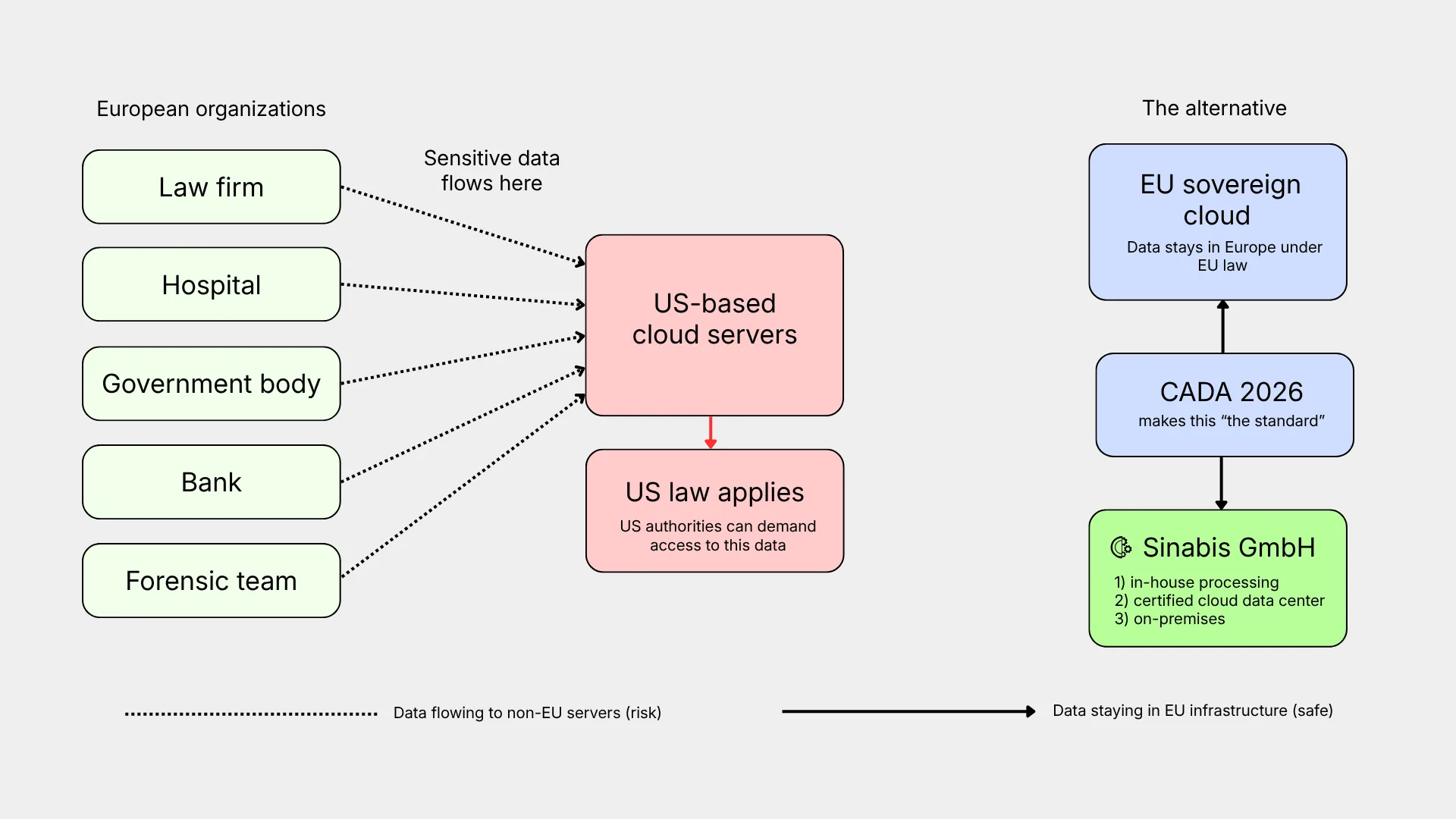
Where does European data actually go?
Most large cloud platforms that European organizations use every day, for email, data storage, AI tools, and business software, are run by American companies. That creates a practical problem that goes beyond business preference.
Under US law, American authorities have the right to demand access to data held by US companies, even when that data belongs to European citizens or organizations and is stored on servers in Europe. For governments, hospitals, law firms, and forensic teams, this is not a theoretical risk. It is a live legal tension that affects how they can and cannot use cloud tools.
Where your data is stored and who owns the infrastructure determines who can ultimately access it. For sensitive data, that distinction matters enormously.
CADA is designed to give European organizations a genuine choice: a sovereign, EU-controlled alternative to the current situation.
II. What the Act Actually Proposes
CADA sets out five core things the EU wants to do:
1) Build more cloud and AI capacity inside Europe, so organizations have credible EU-based alternatives
2) Speed up the process of getting new data centres approved and built across member states
3) Create a dedicated sovereign cloud, a European-controlled infrastructure option for governments and high-sensitivity use cases
4) Reduce dependence on technology from outside the EU for critical operations
5) Make advanced AI tools available to smaller European businesses that currently cannot access them
The Act does not ban the use of American cloud providers. But it signals very clearly that regulated and sensitive workloads, especially in government, healthcare, legal, and financial services, will increasingly be expected to run on infrastructure that stays within European jurisdiction and control.
III. Who Needs to Pay Attention
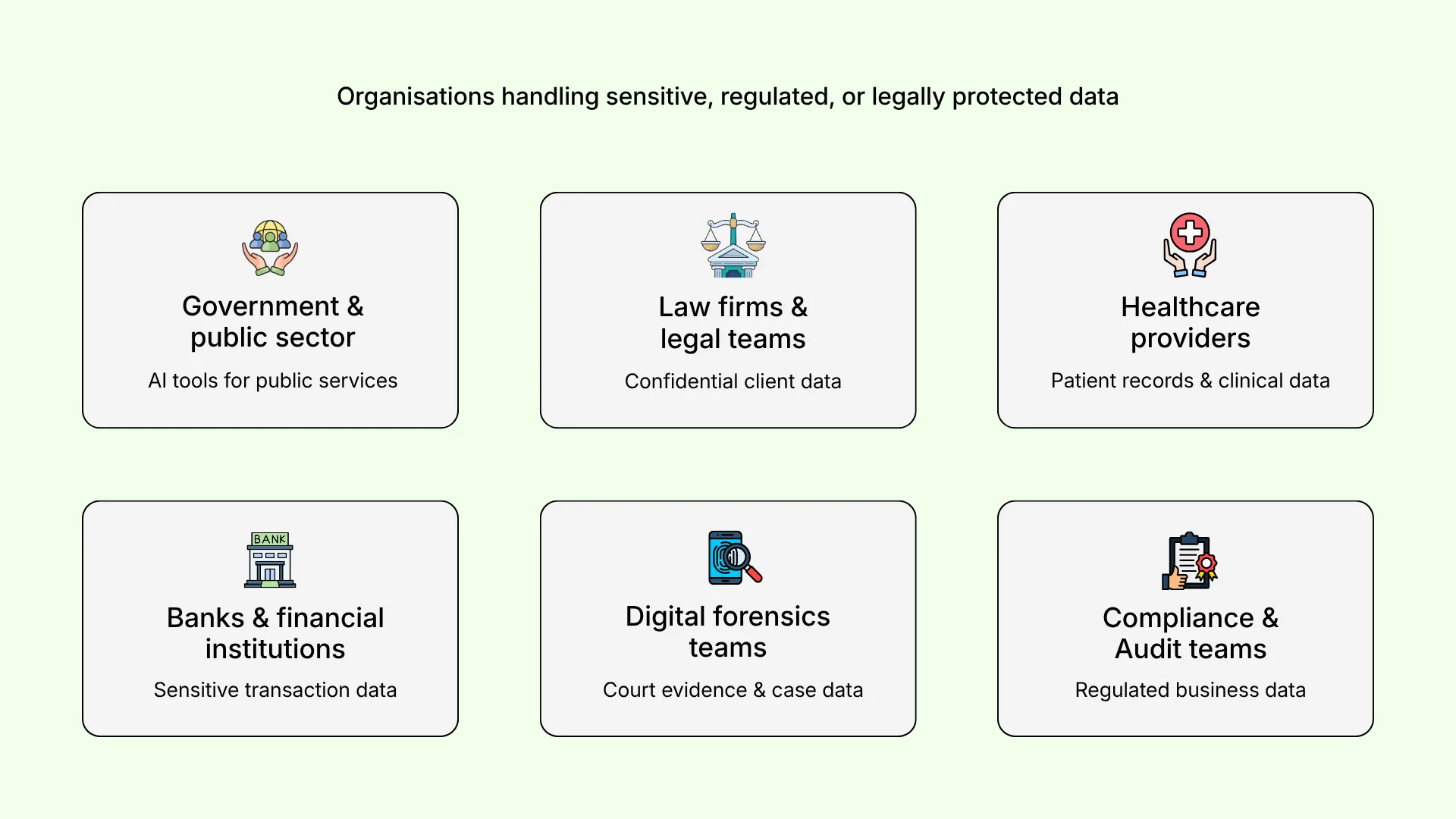
CADA will matter most to organizations that already operate under strict data rules, and those whose work involves information that simply cannot be exposed to third parties:
1) Government bodies and public institutions using AI or cloud tools for public services
2) Law firms and legal teams that work with confidential client files and case data
3) Healthcare providers managing patient records and clinical information
4) Banks and financial institutions running analytics on sensitive transaction data
5) Digital forensics teams handling evidence for court proceedings
6) Compliance and audit teams working with regulated business data
If your organization already takes GDPR, NIS2, or the EU AI Act seriously, CADA is a natural continuation of the same direction. It does not introduce entirely new concepts, it extends and strengthens the framework that is already in place.
IV. The Timeline
The proposal was published in June 2026. The European Parliament, Council, and Commission have agreed a joint target of reaching a final deal by the end of 2027.
After that, there will be a period before the rules formally come into force. So in practical terms, organizations have time, but not unlimited time. The smart move is to use that window to review infrastructure and make decisions deliberately, rather than under pressure when enforcement begins.
The organizations that start reviewing their cloud and AI setup now will have a clear head start. The ones that wait will be reacting instead of choosing.
V. How Sinabis Handles Sensitive Data
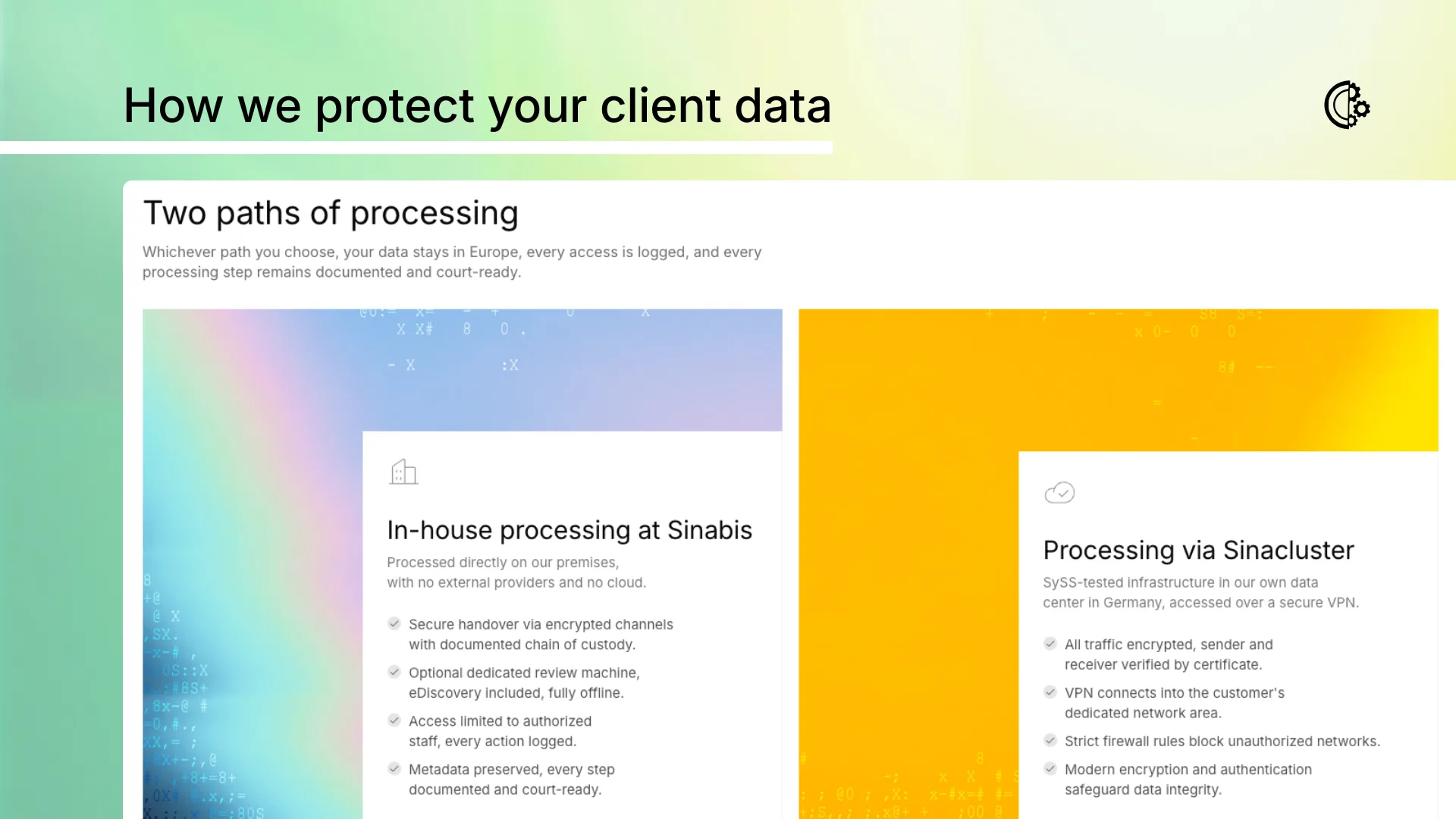
At Sinabis, keeping data inside controlled, sovereign infrastructure is not something we added to meet a regulation. It is how we have always worked. We support law enforcement agencies, legal teams, forensic investigators, compliance officers, and public sector organizations, the exact groups that CADA is most relevant to.
Every organization works differently. Some want to hand over evidence and get results. Others need to stay in full control of where the data goes at every stage. We offer three ways to work with us, all delivering the same reliable, court-ready outcomes:
Hand over evidence or upload directly: Sinabis adapts to your workflow, with the same results either way.
Five Steps to Take Before CADA Comes Into Force
1) List every cloud and AI tool your organization uses and check where the data goes
2) Identify which workloads involve sensitive, regulated, or legally protected data
3) Check whether your current providers fall under non-EU legal jurisdiction
4) Look at on-premise or EU-hosted alternatives for your most sensitive operations
5) Build CADA awareness into your compliance planning for 2027 and beyond
Want to talk about how your organization handles sensitive data?
Sinabis works with organizations that cannot afford to lose control of their data. Whether you need forensic processing, a German-hosted cloud solution, or a fully offline platform, we have an option that fits how you work.
Get in touch: sinabis.com/contact
Sinabis Analytics GmbH · X64 Forensic GmbH · X64 Systems GmbH
Fatima Naz