NIS2 Six Months In: What German Businesses Still Get Wrong

On this page
At a glance, NIS2 has been enforceable in Germany since 6 December 2025, and the BSI asks for documentation before it asks about technology. An estimated 29,500 organisations are in scope, yet many still cannot show an inventory of their critical systems, named board-level responsibility, a tested incident-response process or a list of the AI tools their teams use. Firms that document these four things, and keep client-sensitive AI on-premise, for example on the Sinabox, are best placed for NIS2 compliance in Germany.
Six months after NIS2 became enforceable in Germany, one pattern is clear: the businesses being audited are not the ones with the biggest security gaps. They are the ones that cannot document what they have.
Here is what we are seeing, and what your organisation should do about it. This guide is written for managing directors, IT leaders and compliance teams at medium-sized and large German organisations, and for the advisers who support them. When an auditor asks, evidence counts, not gut feeling.
The rules are being enforced, and most German firms are being audited on documentation, not security. Here is what to fix before the next enforcement wave arrives.
I. What NIS2 Requires: Who Is Affected and What Counts
The NIS2 Directive is enforced in Germany through the NIS2 Implementation Act, which came into force on 6 December 2025. It sets strict cybersecurity governance rules and mandatory incident reporting for an estimated 29,500 organisations in Germany, across 18 sectors including banking, energy, telecoms, manufacturing, food production, postal services, waste management, chemicals and digital services. The law applies to medium-sized and large organisations. In practice, if you have at least 50 employees, or an annual turnover and balance sheet total that each exceed €10 million, and you operate in a covered sector, you are likely in scope. Self-assessment is the starting point, but the BSI is not bound by it, so keep a written record of how you reached your conclusion.
NIS2 asks for five things:
▸ Technical and organisational cybersecurity measures: risk management that covers your systems, your people and your suppliers.
▸ Incident reporting: an early warning within 24 hours, an incident notification within 72 hours and a final report within one month.
▸ Board-level accountability for cybersecurity: management approves and oversees the measures and receives regular training.
▸ Supply chain security: your vendors are your responsibility.
▸ Registration with the BSI: the statutory deadline was 6 March 2026, and the BSI expected full registration by 31 July 2026. By the end of May 2026, industry reports counted about 18,500 registrations among the estimated 29,500 affected organisations. Failing to register can cost up to €500,000.
Fines reach up to €10 million or 2% of global annual turnover for particularly important entities, and up to €7 million or 1.4% for important entities, plus personal liability for senior management for breaches of duty.
II. What We Are Seeing at Six Months
The BSI's approach has been quieter than many expected. It has held supervisory powers since 6 December 2025, but what has happened so far is not a wave of headline fines. It is audits, documentation requests and compliance conversations with organisations that could not show a working regime.
The audits focus on three questions:
▸ Can you show your inventory of critical IT systems?
▸ Can you show documented board-level responsibility?
▸ Can you show your incident-response process, and evidence that you have tested it?
A well-secured company with poor documentation looks worse in an audit than a less well-secured company with excellent documentation.
The reason is simple. No organisation can promise that a cyber incident will never happen, so the aim is to make sure an incident does not turn into an outage, and to show that you manage risk in a controlled, repeatable way: what you have, who is responsible and what you do when something goes wrong. Attackers increasingly use AI to make phishing and account takeover faster and more convincing, which makes that discipline more important, not less.
III. Three Things Most German Firms Still Get Wrong

Gap 1: No Documented AI Inventory. Most organisations use AI in some form: chatbots, assistants built into office software, AI agents and cloud tools embedded in everyday workflows. NIS2 expects risk management that covers your assets and your supply chain, and in practice that means documenting what data each AI tool touches, where it goes and who is responsible. Assistants and agents built into office software act with the permissions of the person using them, so they can reach every file that person can open, including files nobody meant to share. Our guide to the permission iceberg explains why. When the BSI asks for the inventory, most firms produce a list of five tools and miss the twenty-five that are not obvious.
Gap 2: Supply Chain Security. NIS2 makes you responsible for your vendors' security posture. That means a documented list of every third-party service, contractual obligations and ongoing assessment. The most common failure is small: a CRM, an email marketing tool or a payroll service delivered as software-as-a-service (SaaS). Any of them can be your NIS2 gap. For each one, ask who protects your data there, how quickly you could restore it and where it is stored.
Gap 3: Board-level Accountability. NIS2 makes management responsible for approving and overseeing cybersecurity measures, and it expects regular training. In practice, that means a named board member accountable for cybersecurity, documented training and regular reporting. Most mid-market companies have IT teams doing the work but no formal record of board oversight. The fix is not expensive: one hour of a board meeting, formalised and repeated quarterly. Most firms have not done it. For a practical view of building security that stands up to scrutiny, read our guide to zero trust security in Germany for mid-market firms.
IV. The Next Enforcement Wave
Based on BSI communications, the next six months are likely to focus on the following:
▸ AI-specific documentation: where data goes, with cross-references to the EU AI Act, which applies in stages, so the records you build for NIS2 also prepare you for it.
▸ Cross-border data transfers: cloud services outside the EU face particular scrutiny, which turns data sovereignty in Europe and data localisation into practical questions. Our guide to data sovereignty in Europe gives the background.
▸ Incident-response testing: a written plan is no longer enough; evidence of tests is now expected.
▸ Supply-chain audits: documentation from your vendors, not just about them.
V. Five Steps to Take This Quarter
1. Do the AI inventory: List every tool, including assistants and agents built into office software, where the data goes and who is responsible. Review who can open which folders and chats as well, because AI assistants inherit those permissions.
2. Name your accountable board member: In writing, plus documented cybersecurity training.
3. Audit your top ten vendors: Get their NIS2 status in writing, including how they protect and restore your data. Update contracts if needed.
4. Test your incident-response plan: Run a two-hour tabletop exercise, for example a hijacked email account or a business email compromise attack. Document the decisions, the timings against the 24-hour and 72-hour reporting deadlines and what you changed afterwards.
5. Move client-sensitive AI on-premise: For legal, healthcare, financial or forensic firms, cloud AI can create a NIS2 exposure that is hard to document. Private AI that runs on your own hardware keeps the data flow short and easy to prove. Our 10-minute AI test for law firms is a good place to start.
You do not need to be perfect. You need to be documented.
How Sinabis Helps
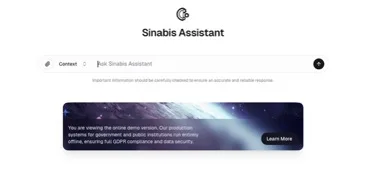
Sinabis Assistant is on-premise AI built for the organisations NIS2 is now auditing: legal teams, forensic specialists, healthcare providers, public-sector bodies and any organisation whose work depends on client data staying inside its own walls. The whole system runs on your own hardware, with no cloud dependency and no data crossing borders you did not explicitly authorise. For teams that want a ready-made unit, the Sinabox combines hardware and software in one self-contained system that runs entirely offline.
Every interaction is logged and versioned by design, which means using Sinabis Assistant supports the documentation duties you already have, rather than adding a new compliance project on top of them. For BSI audits, for court proceedings and for the everyday work of firms whose output has to be defensible, that difference matters. Legal teams can read more in our guide to AI for legal teams in 2026.
Frequently Asked Questions
What organisations ask next about NIS2, from classification to cloud AI.
It depends on your sector and size. Large organisations in highly critical sectors, such as energy, banking, health and transport, are generally particularly important entities. Medium-sized ones in those sectors, and medium-sized and large ones in other covered sectors, are generally important entities. Fines and BSI supervision differ by class, so record how you decided.
An incident that has caused, or can cause, severe operational disruption or financial loss, or considerable damage to other people. Agree your internal criteria in writing before an incident happens, so the decision follows a documented rule.
Possibly both. NIS2 reports go to the BSI. If personal data is affected, Article 33 GDPR also requires you to notify the data protection authority within 72 hours of becoming aware, unless the risk to people is unlikely. Name who handles each report in your incident-response plan.
Indirectly, yes. Organisations in scope pass requirements on through contracts and questionnaires, so a supplier may be asked for security evidence and incident-notification commitments. Having these ready is also a commercial advantage.
Not automatically. NIS2 does not ban cloud services, but you must manage their risks. Before sensitive data goes in, check where it is processed, who can access it and whether the provider may reuse inputs. Keep the answers on file as audit evidence, and for personal data add a data processing agreement, as GDPR-compliant AI use requires.
Sinabis GmbH, based in Bad Soden am Taunus near Frankfurt, helps organisations in Frankfurt, the Rhine-Main region and across Germany put AI compliance and GDPR-compliant AI into practice, on hardware they own, in support of NIS2 compliance in Germany.
Two paths of processing
Whichever path you choose, your data stays in Europe, every access is logged, and every processing step remains documented and court-ready.

In-house processing at Sinabis
Processed directly on our premises, with no external providers and no cloud.
- Secure handover via encrypted channels with documented chain of custody.
- Optional dedicated review machine, eDiscovery included, fully offline.
- Access limited to authorized staff, every action logged.
- Metadata preserved, every step documented and court-ready.

Processing via Sinacluster
SySS-tested infrastructure in our own data center in Germany, accessed over a secure VPN.
- All traffic encrypted, sender and receiver verified by certificate.
- VPN connects into the customer's dedicated network area.
- Strict firewall rules block unauthorized networks.
- Modern encryption and authentication safeguard data integrity.
Learn more: sinabis.com
Explore more from Sinabis GmbH:
Ready to try the Sinabis Assistant?
Try the Assistant directly in your browser or talk to our team about deploying it in your company.

Available Monday to Friday, 9:00 to 18:00 (CET).